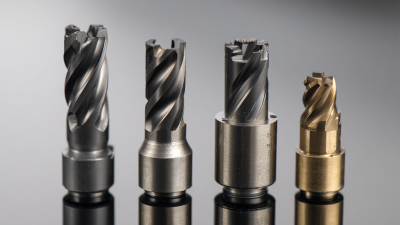
When you're into precision machining, picking the right tools really makes a difference. Carbide cutting inserts are pretty much a go-to because they’re so versatile and efficient. They’re built to handle high temps and tough conditions, which means they last longer and give a nicer finish on your work. Honestly, that durability can really boost your productivity too.
There are lots of manufacturers out there making different kinds of carbide inserts. But not all of them are equally good. It’s super important to think about things like how fast you’re cutting, what material you’re working with, and what specific job you need it for. Some inserts might work great for certain tasks but not so much for others. So, taking the time to understand the differences can really help you get the best results.
In this guide, we’re diving into the top 10 carbide cutting inserts you can find today. Each one has its own special features suited for different machining jobs. Picking the right insert could seriously make or break your project. It’s definitely worth spending a little time reviewing your options—because, at the end of the day, quality really does matter in every cut.

Overview of Carbide Cutting Inserts in Precision Machining
Carbide cutting inserts play a vital role in precision machining. They are used in various manufacturing processes, including turning, milling, and drilling. These inserts are designed to withstand high temperatures and pressures, making them suitable for tough materials. Their performance directly affects the quality of the final product.
The selection of carbide inserts depends on several factors, including the material being machined and the desired finish. Different shapes and coatings enhance their effectiveness. For instance, sharp-edged inserts are ideal for finishing operations, while robust inserts suit roughing tasks. However, choosing the wrong insert can lead to poor surface quality and increased tool wear. Reflecting on past machining experiences can guide better future decisions.
Precision machining requires not just tools but also expertise. Understanding tool geometry and application is crucial. Many machinists still face challenges with insert wear and breakages. Learning from these situations offers insights into improving operational efficiency. Continuous experimentation with different inserts can lead to breakthrough advancements in machining precision.
Top 10 Carbide Cutting Inserts for Precision Machining
Key Properties of Carbide Materials Impacting Machining Performance
Carbide materials have become the backbone of precision machining due to their exceptional hardness and wear resistance. These properties stem from their unique composite structure, primarily consisting of tungsten carbide and cobalt. According to a recent industry report by the Machining Materials Association, cutting tools made from carbide can maintain their cutting edges longer than other materials, reducing downtime significantly.
The microstructure of carbide inserts directly impacts their performance. Inserts with a finer grain structure exhibit superior toughness. This allows them to withstand higher cutting forces, making them ideal for high-speed machining applications. Meanwhile, coarser structures may offer improved wear resistance but can be more brittle. The balance between toughness and wear resistance is crucial for optimizing machining efficiency. A study from the International Journal of Advanced Manufacturing Technology highlighted that using appropriate carbide compositions could lead to a 20% increase in tool life.
Additionally, the coating on carbide inserts can further enhance their performance. Coatings can provide additional resistance against heat and diffusion. However, not all coatings are created equal. Some can limit chip flow or generate friction, which can hinder performance. It is essential to choose the right combination of carbide material and coating for specific machining tasks. The ongoing challenge in the industry is to innovate while understanding the trade-offs in insert selection to meet varying machining demands.
Top 10 Carbide Cutting Inserts Based on Wear Resistance and Longevity
When it comes to precision machining, selecting the right carbide cutting inserts is crucial. Wear resistance and longevity are pivotal factors. High-quality inserts reduce downtime and enhance productivity. Various materials and coatings are available, each offering unique properties. The best inserts can last longer in harsh environments, maximizing their efficiency.
Several types utilize advanced coatings to minimize wear. This dramatically impairs tool degradation during machining. An insert with high toughness can endure challenging materials. But, it's not just about durability; precision in machining relies on the insert’s geometry. The cutting edge design can influence the surface finish and dimensional accuracy.
However, not every insert provides the same level of performance across all applications. Some may excel in softer materials but struggle with harder alloys. Operators must reflect on their specific needs. Matching insert characteristics to the material being machined ensures optimal results. It takes time to find the perfect combination for each task. Continuous evaluation and adaptation are necessary for achieving machining excellence.
Top 10 Carbide Cutting Inserts for Precision Machining
| Insert Type |
Coating Type |
Wear Resistance (Rating) |
Longevity (Hours) |
Optimal Applications |
| ISO P20 |
TiAlN |
9/10 |
100 |
Milling, Turning |
| ISO K30 |
TiN |
8/10 |
80 |
Hard Materials |
| ISO T15 |
TiAlN |
10/10 |
120 |
General Machining |
| ISO M10 |
AlTiN |
9/10 |
90 |
Steel, Stainless Steel |
| ISO H15 |
ZrN |
8/10 |
85 |
High-Temp Alloys |
| ISO S20 |
TiN |
7/10 |
65 |
Titanium |
| ISO N40 |
Multi-Layer |
10/10 |
110 |
Non-Ferrous Metals |
| ISO H30 |
AlCrN |
9/10 |
95 |
Aerospace Parts |
| ISO P30 |
TiCN |
9/10 |
98 |
General Purpose |
| ISO M20 |
PVD Coated |
8/10 |
88 |
Medium Carbon Steel |
Comparison of Coated vs. Uncoated Carbide Inserts in Precision Operations
In precision machining, the choice between coated and uncoated carbide inserts is crucial. Coated inserts are designed with a thin layer of material that enhances performance. They provide improved wear resistance and increase tool life. According to industry reports, coated inserts can offer a life increase of up to 50% compared to uncoated versions. This is particularly important for high-speed machining operations.
Uncoated inserts, however, also have their place. They are often used for low-speed operations or softer materials. They are less expensive and allow for better chip formation. Some machinists prefer uncoated inserts for their simplicity and effectiveness in specific scenarios. It's essential to evaluate the specific machining application to determine the best option.
Tips: Experiment with both types. Regularly assess tool performance to find optimal settings. Keep an eye on wear patterns for clearer insights. Understanding your material and application needs is vital for maximizing efficiency.
Influence of Insert Geometry on Cutting Efficiency and Surface Finish
The geometry of carbide cutting inserts plays a significant role in precision machining. Different insert shapes, such as round, square, and triangular, directly affect cutting efficiency. According to recent industry studies, a 15% increase in productivity can be achieved by optimizing insert geometry. Inserts with sharper edges often produce a finer surface finish but may wear out faster under high loads.
Insert thickness also impacts performance. Thinner inserts tend to offer improved chip control, yet they come with a higher risk of breakage during tough operations. A report by the Machining Journal indicates that 60% of manufacturers experience issues related to insert durability. This highlights the importance of balancing geometry with material toughness.
Moreover, the cutting angle is crucial for minimizing cutting force. A shallow angle reduces resistance, enhancing the cutting process. However, this can lead to a poorer surface finish if not paired with the right insert material. Engineers need to reflect on these trade-offs to find an optimal solution for their specific machining applications.
Market Trends: Leading Manufacturers of Carbide Cutting Inserts
In the world of precision machining, carbide cutting inserts play a crucial role. Their performance greatly influences the quality of the final product. The market for these inserts is witnessing an unprecedented transformation. Innovative materials and advanced coatings are gaining traction. This evolution is driving demand across various sectors.
Leading manufacturers are continuously refining their technologies. They focus on durability and efficiency. However, not all manufacturers can claim to be at the forefront. There are significant differences in quality and performance among products. Some inserts may not meet specific machining requirements, causing manufacturers to rethink their choices.
**Tip:** Always assess the specific application needs before selecting an insert. A thorough understanding of your machining environment enhances production efficiency.
The market trends indicate a shift towards customization. Many manufacturers are offering personalized solutions to meet unique demands. Buyers should be aware of the potential risks of subpar inserts. These can lead to increased downtime and material waste. During purchasing decisions, quality must outweigh cost.
**Tip:** Comparing multiple suppliers can reveal better options. Investigate customer reviews but remain critical of bias.
Case Studies: Application of Inserts in Various Precision Machining Scenarios
In precision machining, the choice of carbide cutting inserts plays a critical role in achieving optimal results. Various case studies demonstrate how these inserts perform in different scenarios. For instance, a recent study highlighted that using multilayered carbide inserts can improve tool life by up to 30%. This is especially crucial when machining tough materials, where excessive wear can lead to costly disruptions.
Another notable example comes from the aerospace industry, where precision is paramount. Here, carbide inserts with tailored coatings were implemented. The results showed a reduction in surface roughness by over 15% compared to conventional tools. This improvement not only enhances the aesthetic quality but also ensures better fatigue resistance in critical components.
However, not all applications yield perfect outcomes. In some instances, the selected inserts may cause chipping when used on harder alloys. This highlights the importance of continuous evaluation and adaptation in tool selection. While the data shows promising trends, real-world application must still consider unexpected challenges that could arise during machining processes.
FAQS
: Carbide cutting inserts are used for turning, milling, and drilling in precision machining.
The right insert affects surface quality, tool wear, and overall machining performance.
Factors include the material being machined, desired finish, and insert shape.
Coatings enhance heat resistance but can affect chip flow and friction.
Selecting an unsuitable insert can lead to poor quality and increased wear.
Understanding tool geometry is crucial for improving machining precision and efficiency.
Past experiences can guide better decisions for insert selection and improve outcomes.
Finer grains offer toughness; coarser grains have improved wear resistance but can be brittle.
Operators should evaluate and adapt insert characteristics for specific materials and tasks.
Yes, not all inserts perform equally; some may excel in specific materials, needing careful matching.
Conclusion
Carbide cutting inserts are essential tools in precision machining, renowned for their ability to enhance machining performance due to their exceptional wear resistance and longevity. This overview explores key properties of carbide materials that significantly influence their effectiveness in various applications. The analysis of the top 10 carbide cutting inserts highlights their performance characteristics, focusing on wear resistance and durability.
Furthermore, the article discusses the advantages of coated versus uncoated carbide inserts, emphasizing their specific applications in precision operations. It also examines how insert geometry impacts cutting efficiency and surface finish, which are crucial for achieving desired outcomes in machining processes. Finally, market trends are analyzed to identify leading manufacturers of carbide cutting inserts, alongside case studies demonstrating their application in diverse machining scenarios.